I’m Dr. Jonathan Leusden, DC. I’ve practiced chiropractic since 2006, and the clinical side of my life lives at Gentle Chiropractic Salt Lake and at Gentle Chiropractic Utah in Richfield. This page is about the thing I do with my evenings. It’s about paragliding, and about central Utah, the place that turned me into a cross-country pilot and turned out to matter more to the sport than I expected when I started.
Learning to fly here
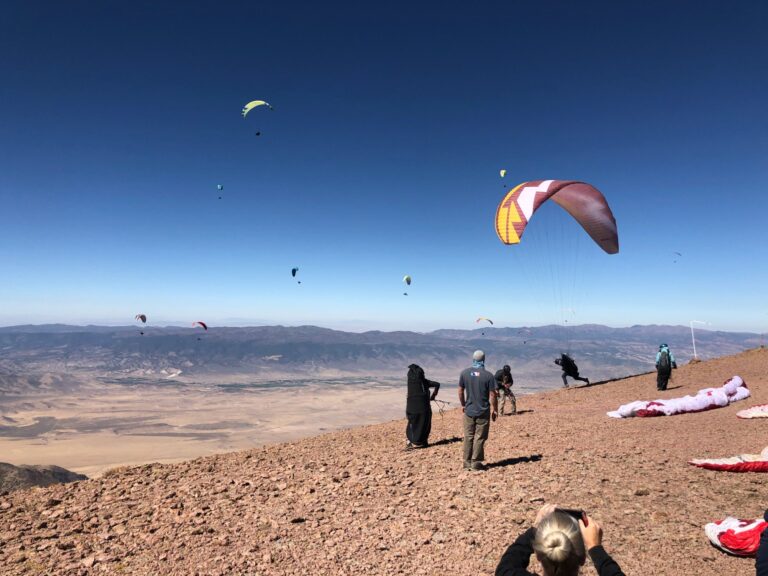
I learned to paraglide in 2015, launching off the ridges above Richfield and Monroe in central Utah. Cove and Monroe Peak are still my home sites. Most good flying here happens in the last two or three hours before sunset, once the day’s heat has settled and the lift turns smooth and carries unusually high. That’s the flying I chased for years: launch late, work an evening triangle, land after the light starts to go.
Why I fly
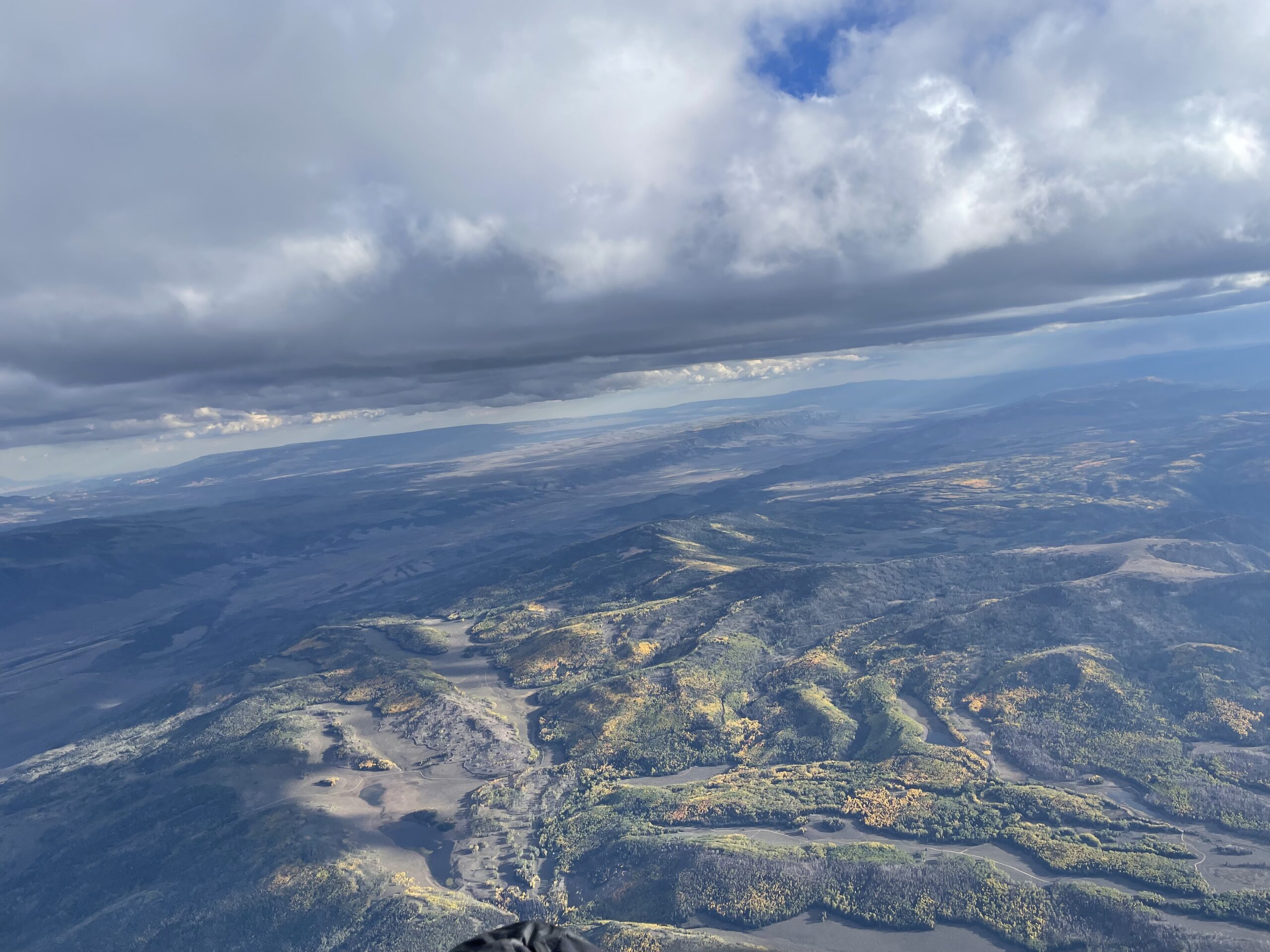
The best flying I do is quiet. A thermal is a column of rising air you cannot see. You find it by feel, through the harness and the brakes, and then you have to stay centered in it while it pushes, drifts and changes shape underneath you. Let your attention slip for a few seconds and you fall out of it. So you don’t let it slip. Everything else, the practice, the farm, whatever was on my mind at launch, goes quiet.
That is the part I keep coming back for. It works on me like meditation, except it happens a few thousand feet over the valley, and it is the most reliable way I know to get fully in the zone and stay there for hours.
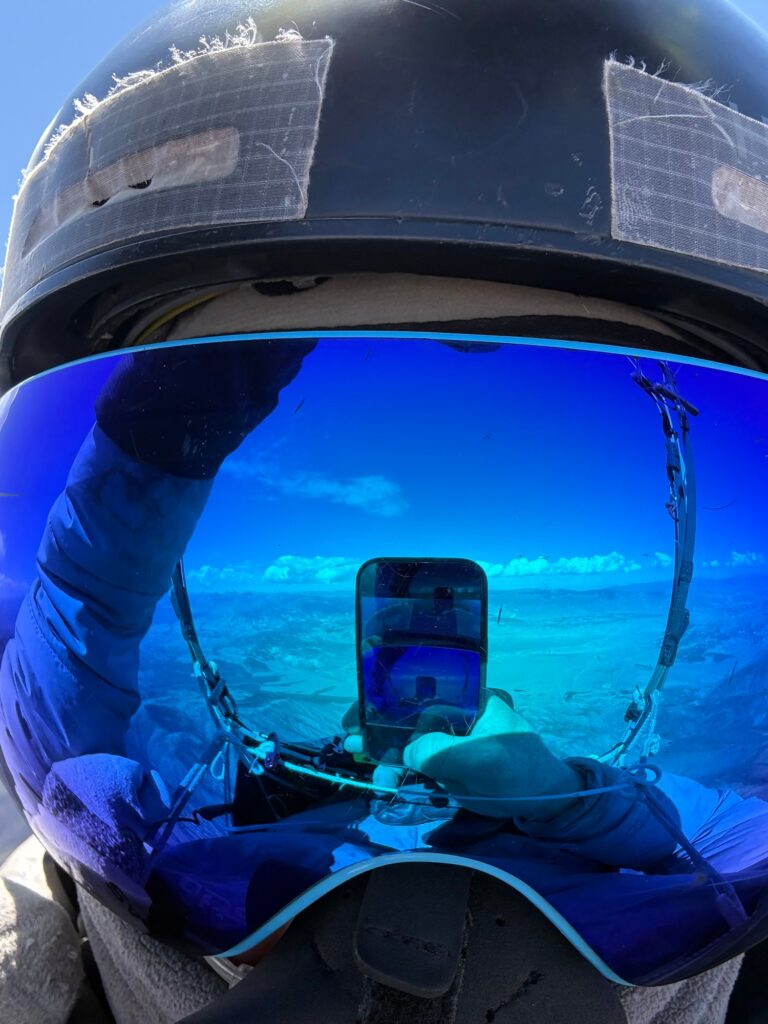
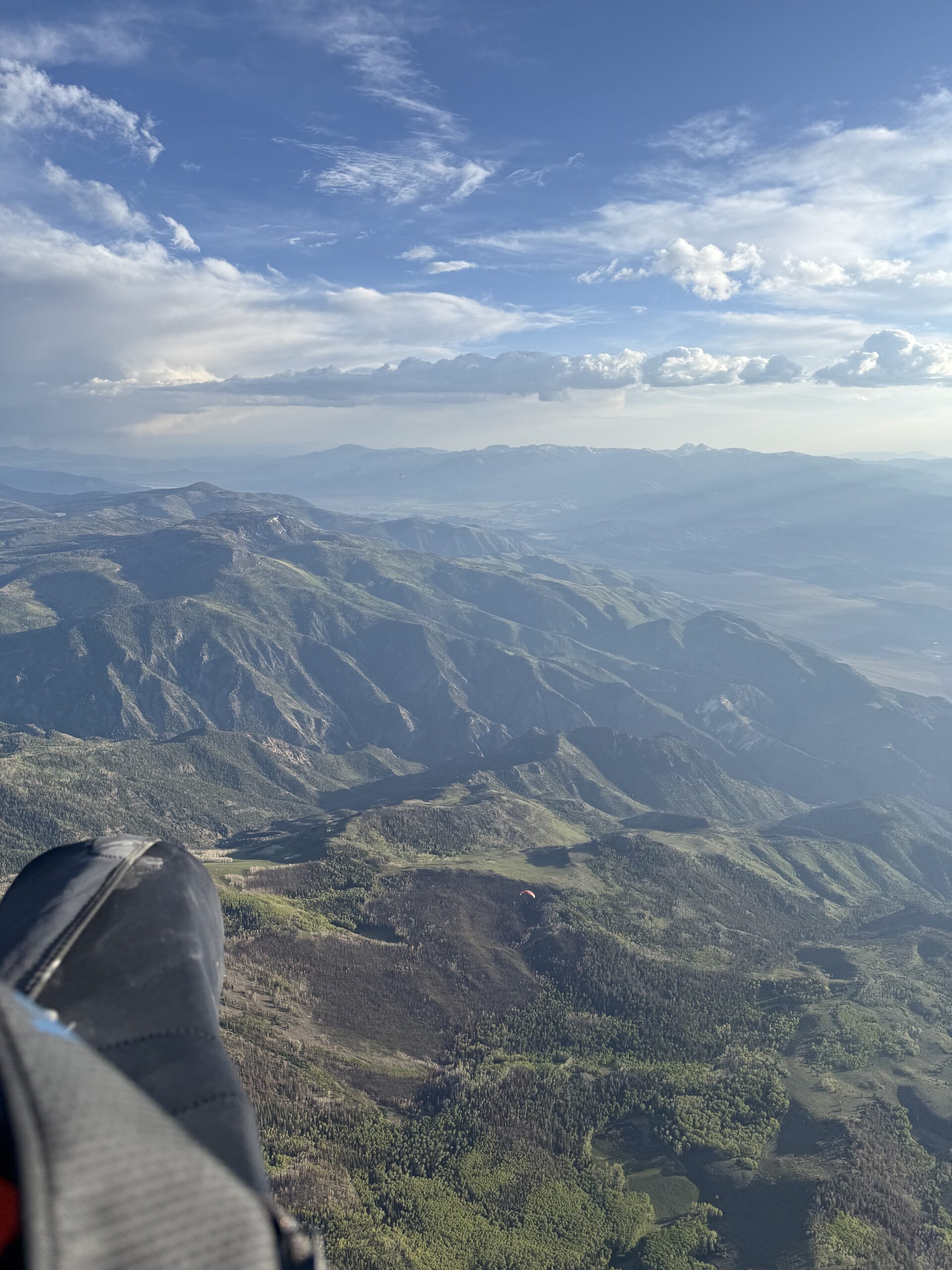
It is also a kind of wrangling. The air is doing something powerful, and the job is to read it, stay with it and ride it up without letting it throw you. A rodeo without an audience. On a strong day we go as high as the air will take us, sometimes to 17,900 feet on aviation oxygen, where the valley floor turns into a map.
And it is social. Most of my flying now is with friends, the same group on the same launches most evenings, calling out climbs to each other on the radio and sharing the good thermals. We fly evening triangles that bring everyone back around, and we all come in to land at the Canyon View landing zone in Monroe as the light goes. The flight itself is solitary. Everything on either side of it is company.
The numbers
Quick honesty check before the numbers: XContest only has what I’ve bothered to log, not everything I’ve flown. Real totals are closer to 1,500 hours in the air over my flying life, and roughly 800 of those hours are right here in the Sevier Valley, off Cove and Monroe Peak alone. Most evenings never make it onto a website. They just get flown.
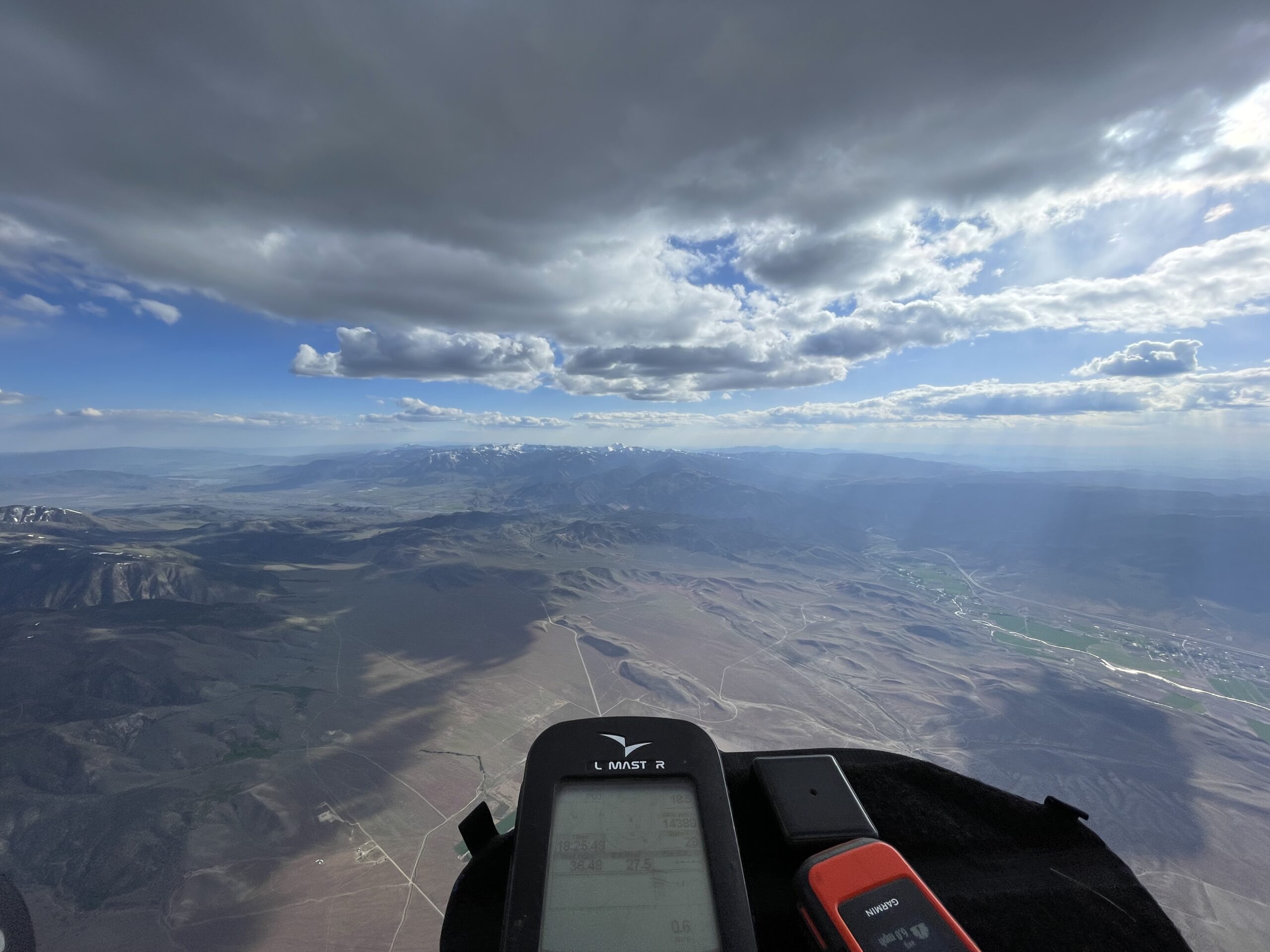
What XContest does have, since 2018, is still a good sample: 150+ logged flights, 6,800+ km, about 360 hours worth of GPS tracks. My longest single flight is a 145 km flat triangle out of Cove, flown in April 2018. My second-biggest triangle, 136 km worth 190 points, came out of the same launch in April 2021. Most days aren’t record days. They’re 20 to 90 point evening triangles, one after another, which is really what builds a pilot over time.
For years now the target has been simple and still unclaimed: 100 XContest points on a genuine evening triangle out of Cove, launched in that last two-to-three-hour window before sunset. We’ve gotten close, 87 points, 90 points, more times than either of us can count, but not landed on three digits yet. That chase, more than any single flight, is what this valley is actually about.
Why this valley is on the map
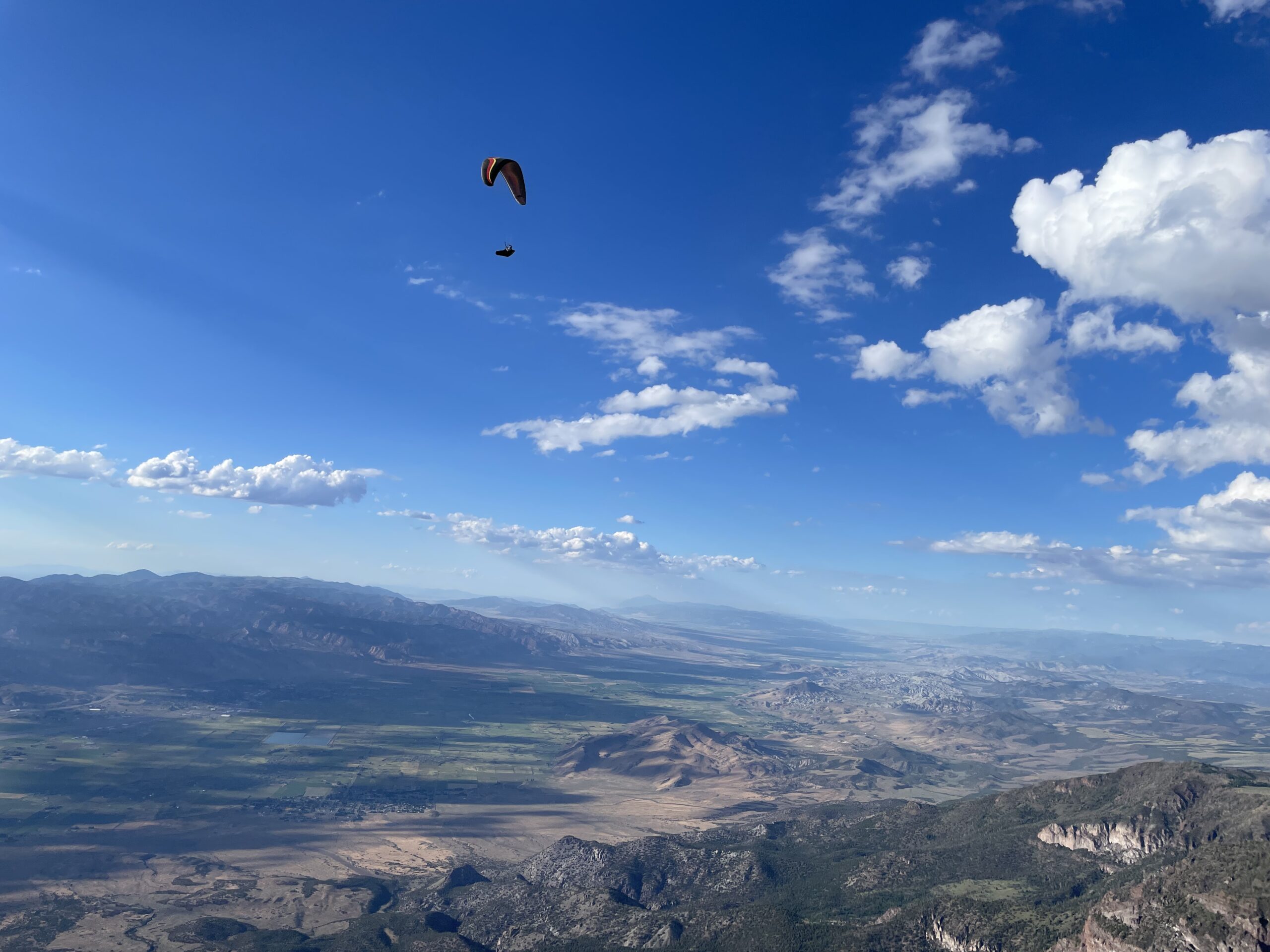
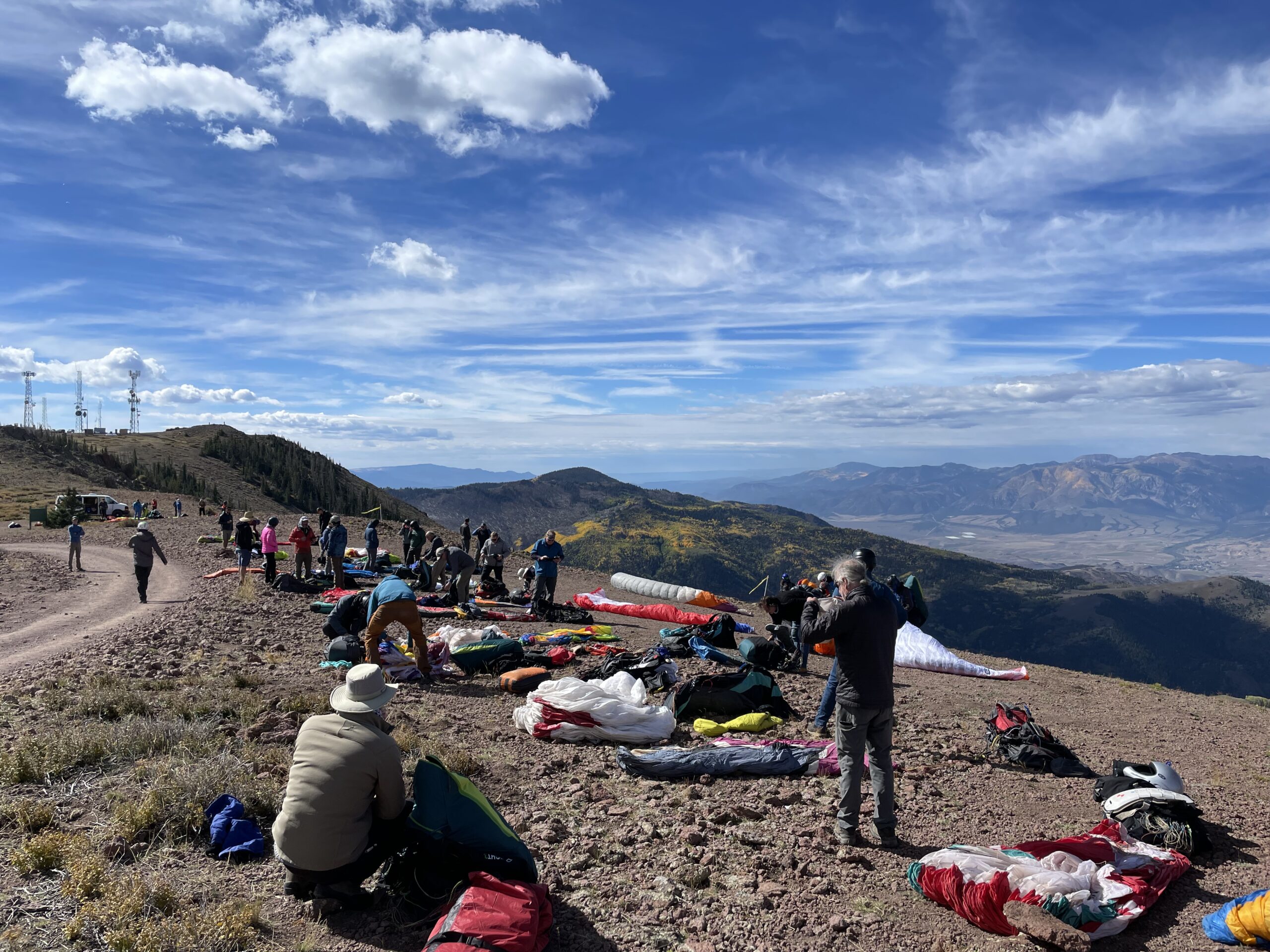
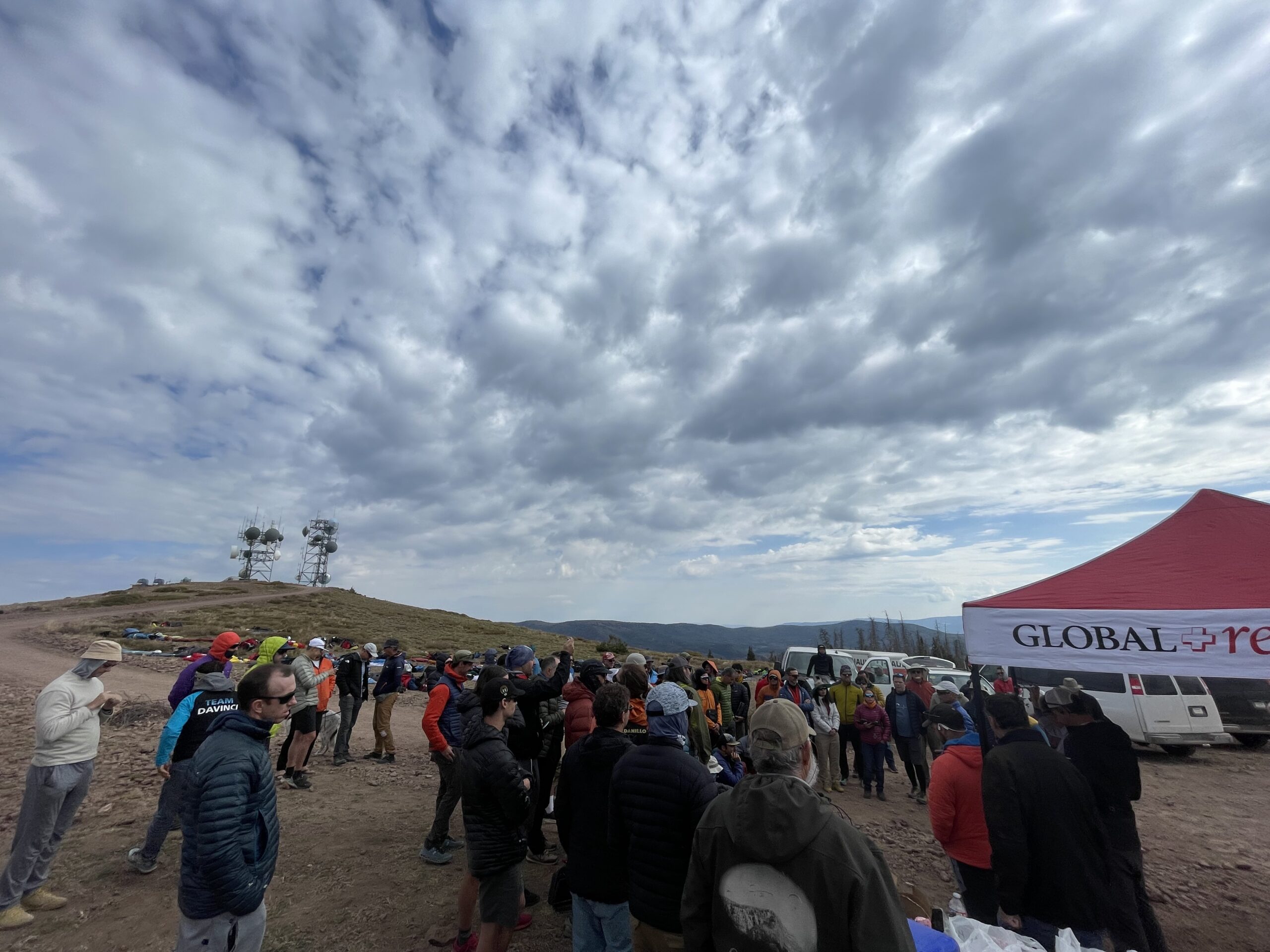
Central Utah’s reputation as a paragliding destination didn’t happen by accident. Enough big flights got posted out of Cove and Monroe Peak, some of them mine, that other pilots and eventually competition organizers started paying attention. The area now hosts some of the sport’s biggest events: the Global Rescue X Red Rocks hike-and-fly race, organized by Red Bull X-Alps veteran Gavin McClurg and running every year since 2021; the Niviuk Red Rocks Wide Open; a Paragliding Pre-World Cup and World Cup at Monroe; and in September 2026, the 7th FAI Pan-American Paragliding Championships. Event organizers note that flights of more than 300 km have been flown out of Monroe. None of that happens without a community of local pilots willing to launch, fly long, and land in the dark, and I’ve been glad to be part of building that.
Flying beyond Utah
Paragliding gave me a reason to travel, and I’ve spent a good part of the last decade doing it.
Colombia. For seven winters I’ve flown the Valle del Cauca out of Roldanillo, usually across January and February, one of the best-known cross-country paragliding valleys anywhere in the world. Roldanillo was hit hard by a 7.4 magnitude earthquake on August 10, 2026. It’s a place and a community I care about, and I’m watching the recovery closely.
Mexico. Flying out of Valle de Bravo and the launches around it, including El Peñón, plus time flying near Yelapa.
Texas. A week at Hearne in August 2021 produced my second-longest flight ever, 112 km.
Oregon. Woodrat Mountain, above the Applegate Valley near Ruch.
South Africa. Porterville and Piketberg on the XC side, along with flying and traveling through Cape Town and Wilderness.
Italy. The Dolomites, in the north.
The Red Rocks Fall Fly In
For ten years I helped organise the Red Rocks Fall Fly In, a free flight gathering here in the valley. It drew somewhere between one hundred and five hundred pilots a year, with 2020 the biggest it ever got.
We are not running it any more. Partly technical reasons, partly the plain fact that ten years of putting on an event that size will use a person up. I do not regret a year of it. A lot of pilots saw this valley for the first time because of that weekend, and some of them never really left.
The competitions do that job better now in any case. A fly in brings numbers. A sanctioned competition brings qualified pilots, and qualified pilots are what a site like this actually benefits from.
Competitions
Flying cross-country on your own is one thing. Flying a task, on a set day, against a field of people who are all better than you would like them to be, is another. The competitions I have flown:
- Colombian National Championships, 2017.
- Applegate Open, Woodrat Mountain, Oregon, 2018.
- US Open of Paragliding, Chelan, Washington, 2019.
- Lone Star Championships, Hearne, Texas, 2020.
- Red Rocks Wide Open, Monroe, Utah, 2022, 2023, 2024 and 2025.
The last one is the one I care most about, because it happens here. Four years running, pilots have flown a national-level competition off the same launches I fly on an ordinary Tuesday evening.
If you’re here for the practice
If you landed on this page looking for the chiropractor rather than the pilot: I’m Dr. Jonathan Leusden, DC, and I practice gentle, low-force chiropractic care (Open Source Technique) in Salt Lake City. Start at Gentle Chiropractic Salt Lake for treatment details and booking, or Gentle Salt Lake Chiropractor for more in-depth patient education. I also see patients in Richfield, Utah through Gentle Chiropractic Utah / Takeoff Consulting. You can book either location here.
And if you want to see where all this flying actually happens: it’s the valley I live in. I run a small orchard and sheep farm here, and most evenings I’m watching the sky over Cove and Monroe Peak.